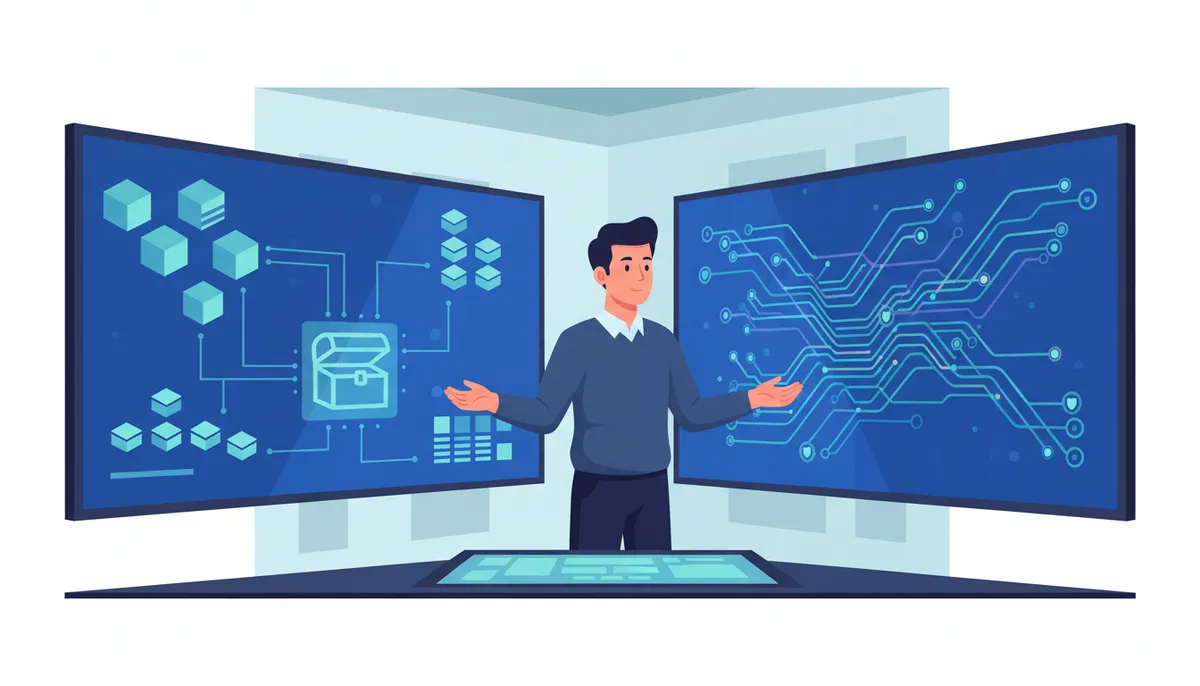
As the IT operations landscape shifts dramatically across North America and Europe, CIOs, CISOs, and IT directors are looking toward developing what will be the "Next Generation" of Network Management Platforms to assist them in understanding their enterprises' current and future requirements. Networks have emerged as critical components of Digital Business Models.
The IT Operations Landscape is currently evolving into creating Real-Time Connectivity between Cloud Applications, Remote Workforces, Data Centers, and Branch Offices. A 2024 Gartner Report indicates that 65% of all Workloads are currently Hosted in a Hybrid or Multi-Cloud Environment. As per Slurp'it the creation of Real-Time Connectivity will create Operational Complexity, and therefore the need for Visibility and Control of every Device, Link, and User. As a result of these changes, it is expected that Network Management Capabilities will extend far beyond Monitoring.
This article focuses on the following:
- What IT Leaders expect in terms of Network Management Capabilities
- Why are the Expectations important
- How will the next generation of Enterprise Network Management Solutions assist the
Teams in Delivering and Meeting Expectations in terms of Performance, Security, Reliability, and Compliance.
Automation is becoming necessary for large businesses to have in place because of the complexity of managing networks manually. When it comes to automation, business leaders want predictable and safe automation to help them with configuration management, compliance checks, software upgrades, and routine validation tasks as per Slurp'it.
The business leaders are looking for the following when it comes to automation:
- Guardrails against accidental misconfiguration
- To have all Configuration Changes with Versioning
- To have approval workflows for sensitive action items
- Automated backups to allow for quick roll-back
- Clear logs that show who did what and when
A recent report published by Cisco in their 2024 Networking Trends Report, states that companies who are implementing automation reduce operational errors by 70%. This has executive-level support because reducing errors leads to reduced outages and a more stable environment in which to work.
Leaders Expect Automation, but They Want It to Be Safe and Controlled
In addition to the need for automation, leaders are seeking integration of their automation solutions with their current IT systems. Business leaders want solutions that offer an open API standard, use Python-based scripts, and allow easy use of other third-party tools rather than solutions that put them in a vendor-specific box as per Slurp'it.
Leaders Expect Predictive Insights Instead of Static Dashboards
Another expectation that business leaders have regarding these platforms is that they deliver predictive insights rather than static dashboard displays. Historically business leaders have relied on monitoring tools that tell them things like CPU Usage, Memory Utilization, and Bandwidth Usage; however, modern business leaders expect much more from their platforms in regards to predictive insights about potential future issues.
Leaders Expect Simplified Compliance and Audit Readiness
Compliance continues to be a major burden and time-consuming issue for many organizations. Legal requirements, such as those in the GDPR, HIPAA, PCI DSS, ISO and others require that companies maintain exhaustive documentation regarding their configuration state, access rules, and incident response procedures. Business leaders want their platform to lessen the burden of compliance and audit preparedness.
A strong network management platform should have the capability to automate the majority of tasks that are necessary for maintaining an audit-ready compliance posture. This automation streamlines the process of preparing for audits by eliminating many of the manually intensive tasks associated with maintaining an audit-ready posture.
Leaders Expect Support for Distributed Work and Global Operations
When it comes to network management platforms, executives expect that these platforms will support both a distributed workforce and the ability to manage businesses globally.
The evolution of the workplace has led to a significant growth in remote workers, increased connectivity between branch offices, increased reliance on mobile devices, and increased use of cloud-based applications. All of these factors require a highly scalable and robust network to support their continued growth as per Slurp'it.
Consequently, executives expect the ability for platforms to deliver:
- Centralized monitoring and reporting of organizations located in different geographic areas.
- Consistent enforcement of organizational policies across the company.
- Real-time visibility into the organization's infrastructure across all geographic markets.
- Security for remote employees and business travelers.
- Ability to manage both in-house and cloud-based environments from one central point.
The ability to manage the entire corporate network from a single location is now considered standard. This is due to the fact that most organizations today operate out of more than one data center and/or geographic area.
Leaders Expect Clear ROI from Their Network Management Investments
Executives need to justify the dollars spent on these applications. This means that they seek out solutions that provide quantifiable benefits in the form of:
- Increased uptime.
- Decreased resources required for network operations.
- Increased productivity of network staff.
- Decreased incidence of security breaches.
- Decreased time spent preparing for audits.
- Faster implementation of changes.
- Decreased opportunity for misconfiguration.
Most organizations will realize the ROI of a platform within the first year of implementation. In order to build an ongoing case for continued investment in automation, executives will need to have the necessary metrics available to demonstrate the success of a platform.
The Path Forward for Enterprise Leaders
As the workplace continues to evolve, executives' expectations of network management platforms will continue to evolve. Businesses' reliance on cloud computing, remote work, digital services, and cybersecurity will all increase. Therefore, there will be a growing demand for a platform that provides not only visibility but also security, compliance, and intelligence in an organization.
In conclusion, the expectations of a network management platform that meets the above criteria are more than a technical solution for IT departments; they represent strategic assets for organizations and will support and enhance organizational strategies. For more information, contact us at Slurp'it!