
Executive answer: In a Slurp'it vs IP Fabric comparison, Slurp'it is the better fit when your priority is fast, flexible, no-code network inventory that can feed the tools you already use. Choose IP Fabric when your primary requirement is an integrated assurance platform with native topology, path simulation, snapshots, intent checks, and pre/post-change validation.
The products overlap in discovery, APIs, reporting, and source-of-truth workflows. However, they start from different ideas. Slurp'it is a composable inventory and data foundation. IP Fabric is a broader network assurance and digital-twin suite. Therefore, choose the operating model you want, not the longest feature list.
Slurp'it vs IP Fabric at a glance
| Decision area | Slurp'it | IP Fabric | Best fit |
|---|---|---|---|
| Primary role | Flexible network inventory discovery and structured data foundation | Discovery, topology, assurance, and validation platform | Depends on whether inventory flexibility or integrated assurance leads the project |
| Getting started | No-code workflow, free Foundation tier, download and sandbox options | Self-guided demo and commercial evaluation | Slurp'it for a transparent, hands-on entry |
| Data collection | Choose commands, data, and schedules; parse CLI output into structured records | Agentless, API-native discovery that builds a contextual model | Slurp'it for granular collection control |
| Extensibility | Community-driven TextFSM, custom templates, REST API, Python SDK, JSON/CSV/XLSX exports | Open API, custom checks and reports, GUI, API, and MCP | Slurp'it for open, composable workflows |
| NetBox and Nautobot | Open-source plugins for discovery, onboarding, synchronization, and reconciliation | NetBox onboarding and assurance workflows are available | Slurp'it for teams building deeply around NetBox or Nautobot |
| Topology and path analysis | Inventory-centric; topology diagrams are listed as a beta add-on | Native topologies and Layer 1-3 through application path simulations | IP Fabric |
| Change assurance | Historical data and network snapshot comparison through the API | Full and partial snapshots, intent checks, path lookups, and pre/post-change validation | IP Fabric |
| Deployment model | Containerized components can run together or separately, with horizontal workers and segmented-network support | Evaluate against your required enterprise architecture | Slurp'it when modular deployment matters |
| Pricing visibility | Free tier and public starting prices | No verified public price used in this comparison | Slurp'it for budget transparency |
The real difference: data foundation or assurance suite?
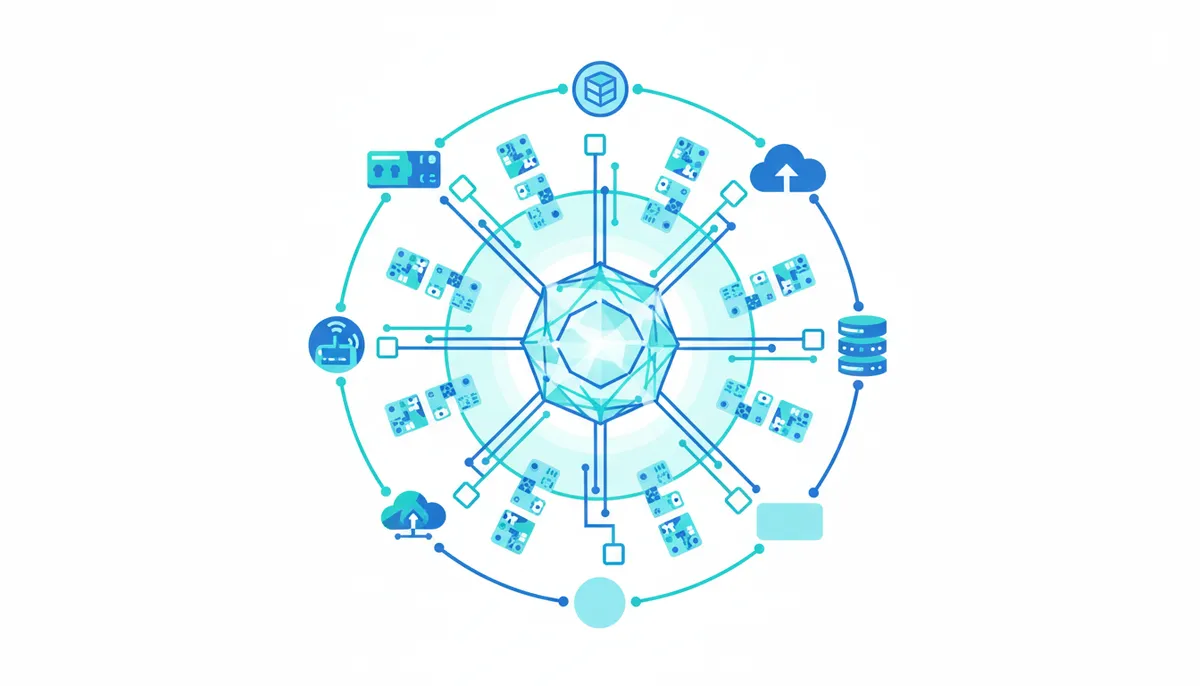
Slurp'it is designed to discover devices, collect selected CLI output on custom schedules, parse it, and make the resulting data useful through reports, exports, APIs, and automation. Its point-solution philosophy is deliberate: it is meant to fit into a stack rather than replace every neighboring tool. The Slurp'it product architecture supports containerized components, horizontal workers, segmented networks, historical data, a REST API, and a Python SDK.
IP Fabric goes further into integrated assurance. Its published capabilities include agentless discovery, native topologies, end-to-end path lookups, Layer 1-3 through application path simulations, full and partial snapshots, intent checks, and pre/post-change validation. It also exposes data through a GUI, API integrations, and MCP. See the IP Fabric capabilities overview for the vendor's current description.
That distinction matters. If your problem is “we need reliable, normalized inventory data everywhere,” Slurp'it is usually the more focused answer. If your problem is “we need to model paths and validate network behavior before and after changes inside one platform,” IP Fabric may justify its broader scope.
Six reasons Slurp'it is the better fit for flexible network teams
1. It starts with no-code inventory discovery
Slurp'it lets teams discover assets, choose what they want to collect, set the collection frequency, and convert CLI output into actionable data without requiring coding. That lowers the entry barrier for network engineers, IT managers, and MSP teams that need useful inventory before they have built an automation practice.
The workflow stays understandable: discover, define, store and analyze, then use the data in reports or automation. For teams that do not need a full assurance suite on day one, this narrower path can reduce implementation overhead and make the first proof of value easier to scope.
2. It gives you granular control over the data you collect
Slurp'it is not limited to a fixed inventory schema. Teams can select show commands, use custom schedules, retain historical data, build reports, and retrieve results through the REST API. More than 1,700 TextFSM templates are listed on the current product page, and teams can build, test, and share additional templates.
This model suits NetDevOps teams that want the collection layer to serve multiple consumers. The same normalized data can support an inventory view, a source of truth, a custom report, a script, or another automation system. You can export structured data as JSON, CSV, or XLSX instead of keeping every use case inside one interface.
3. Its composable philosophy preserves tool choice
Slurp'it explicitly positions itself as a point solution that integrates with an existing network stack. That is attractive when your team already relies on NetBox, Nautobot, ticketing, custom automation, or specialist compliance tools and does not want one suite to become the center of every workflow.
A composable approach also lets responsibility remain clear. Slurp'it can collect and normalize observed network data, your source of truth can hold intended state, and other tools can handle monitoring, backup, compliance, or change execution. The benefit is not fewer products at any cost. It is the freedom to choose the strongest component for each job.
4. Open-source extensions reduce lock-in
Slurp'it uses community-driven TextFSM parsing and allows teams to create and share templates. Its NetBox and Nautobot plugins are open source, and its MCP implementation can be forked or adapted. This gives engineers practical extension points when a new vendor, command, field, or AI workflow appears.
The current supported vendors list covers more than 180 vendors. Slurp'it also states that its team can add a new vendor module or update an existing one when needed. Coverage still needs to be validated against your exact device models, operating systems, commands, and desired attributes during a pilot.
5. NetBox and Nautobot are first-class workflows
For source-of-truth teams, discovery is only the beginning. The open-source NetBox plugin supports discovering the live network, onboarding data into NetBox, mapping fields, and reconciling actual state with intended state. It supports both on-premises and cloud NetBox deployments.
The Nautobot integration follows the same discover, onboard, and reconcile model for on-premises and cloud environments. That makes Slurp'it a strong fit when NetBox or Nautobot remains the source of intended truth and the discovery platform should supply current observed data rather than replace that operating model.
Independent context from NetBox Labs describes both Slurp'it and IP Fabric as discovery partners. It characterizes Slurp'it's focus as simplifying discovery, import, and reconciliation, while IP Fabric provides broader discovery and assurance using snapshots. That reinforces the architectural distinction rather than declaring one product universally better.
6. The entry path and starting prices are transparent
Slurp'it Foundation is free for life and includes unlimited network-device discovery, plus Professional functionality for 10 devices. The Foundation tier supports onboarding and synchronization with NetBox, Nautobot, and Infrahub. This gives teams a concrete way to validate discovery and source-of-truth workflows before committing to a larger deployment.
On the Slurp'it pricing page, Professional starts at $5,000 per year for fewer than 250 devices, while Enterprise starts at $22,500 per year for fewer than 1,000 devices. Those figures were verified on September 25, 2026. We did not find verified public pricing for IP Fabric, so this article does not estimate or imply its cost.
Where IP Fabric wins
IP Fabric is the stronger fit when topology, path intelligence, and assurance are core requirements rather than adjacent tools. Its platform builds native topologies from observed network and cloud behavior and supports path simulations from Layer 1 through Layer 3 to applications. That is a different level of integrated behavioral modeling from an inventory-focused foundation.
It also brings full and partial snapshots, end-to-end path lookups, intent checks, and pre/post-change validation into one assurance workflow. A large enterprise that must repeatedly prove reachability, compare observed states, investigate dependencies, or validate complex changes may prefer that integrated experience over assembling separate components.
This is not evidence that Slurp'it is weaker at its intended job. It means the buying question changes. If your success criteria depend on native topology and path simulation, IP Fabric should be on the shortlist. If those capabilities are secondary and you mainly need current, flexible inventory data feeding your chosen stack, paying organizational and implementation attention to a broader suite may be unnecessary.
Scenario-based choice guide
Choose Slurp'it if you are building a NetBox or Nautobot operating model
You want observed network data to populate and reconcile with an independent source of intended truth. Open-source plugins, field mapping, on-premises and cloud support, and a free discovery entry point make Slurp'it the more natural fit.
Choose Slurp'it if you need custom inventory without a scripting project
You need to collect vendor CLI data, normalize it, schedule it, and expose it through reports, exports, or APIs. Slurp'it's no-code workflow and TextFSM ecosystem are aligned with that requirement, while the API and SDK remain available when the team wants deeper automation.
Choose Slurp'it if you are an MSP or operate segmented networks
You need flexible deployment across security boundaries, the option to run components together or separately, horizontal workers, and the ability to keep data on premises while the GUI or API runs from the cloud. Validate tenancy, role, and operational requirements against the appropriate Slurp'it plan during evaluation.
Choose IP Fabric if change assurance is the business case
You need snapshots, path lookups, intent checks, and pre/post-change validation to be native parts of one platform. IP Fabric's published capability set directly addresses that buying requirement.
Choose IP Fabric if topology and application paths drive daily operations
You need automatically built topologies and simulations that trace behavior from physical and network layers through critical applications. IP Fabric is designed around that contextual model, not only around extracting and distributing inventory records.
Evaluate both if discovery is only the first phase
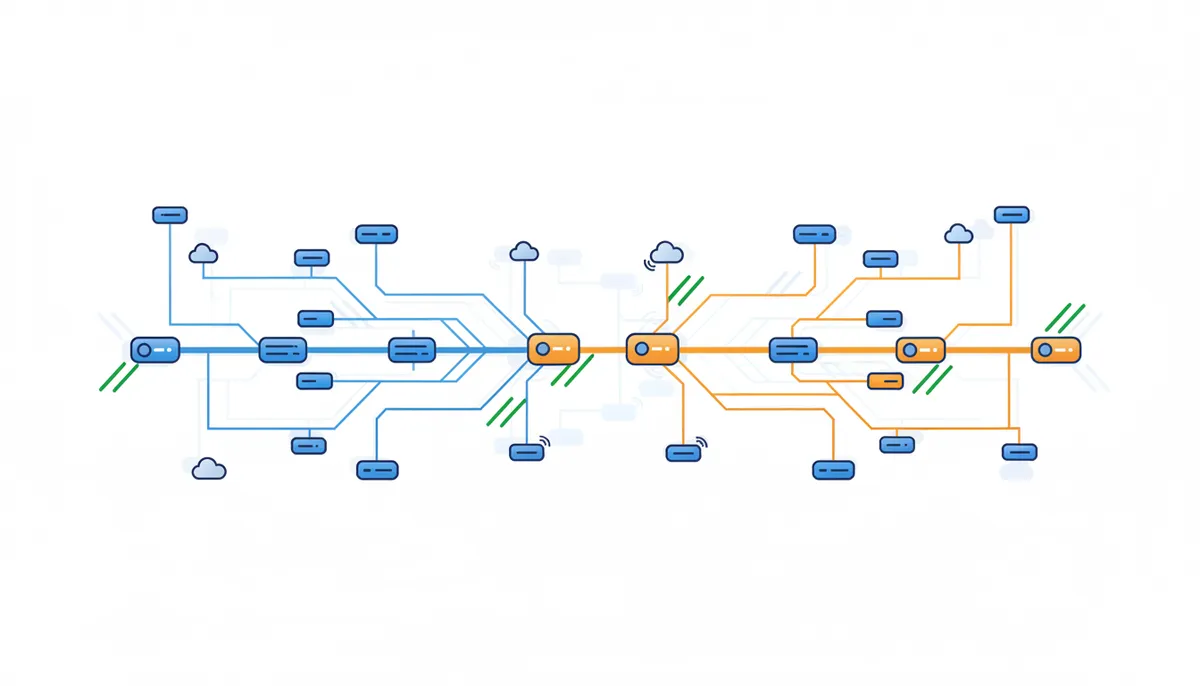
If your immediate need is inventory but your roadmap includes assurance, test both against the future workflow. Slurp'it may remain the data foundation in a composable stack. IP Fabric may consolidate more capabilities in one suite. The correct answer depends on ownership, integration boundaries, operational complexity, and the evidence each pilot produces.
Practical evaluation and migration checklist
- Define the primary outcome. Decide whether the project is mainly about inventory accuracy and data reuse, or topology, path analysis, and change assurance.
- Build a representative device sample. Include your major vendors, operating systems, legacy devices, virtual appliances, segmented sites, and difficult authentication cases.
- List required attributes and commands. Test discovery depth, parsing quality, normalization, custom fields, and how quickly missing data can be added.
- Test source-of-truth workflows. Measure onboarding, mapping, duplicate handling, reconciliation, approval steps, and rollback for NetBox or Nautobot.
- Validate deployment constraints. Cover on-premises data, cloud access, air-gapped environments, worker placement, security domains, credentials, and scaling.
- Compare downstream usability. Export data, call the API, build a report, connect a script, and prove that another team can consume the results.
- Run an assurance use case. If topology or change validation matters, test a real path question and a controlled pre/post-change scenario rather than relying on a feature checklist.
- Check AI controls. Slurp'it's open-source MCP supports online or offline LLMs, multi-tool calls, and live-network access. It can be forced into read-only mode, which should be tested before enabling any changes.
- Calculate total operating effort. Include licenses, infrastructure, implementation, template or integration work, training, support, and the staff time needed to own the platform.
- Set acceptance criteria before the pilot. Use measurable requirements such as device coverage, required fields, reconciliation accuracy, API output, path-answer quality, and time to produce a usable result.
Frequently asked questions
These questions address common buying concerns that are not fully covered by a feature table.
Is Slurp'it a direct replacement for every IP Fabric capability?
No. The products overlap in discovery, normalized data, APIs, reporting, and source-of-truth use cases, but IP Fabric includes native topology, path simulation, assurance snapshots, intent checks, and pre/post-change validation. Slurp'it is better evaluated as a flexible inventory and data foundation within a composable stack.
Can Slurp'it support enterprise-scale and segmented environments?
Slurp'it is containerized, supports components running together or separately, horizontal workers, and segmented networks. It can keep data on premises while providing cloud-based GUI or API interaction. Enterprise buyers should still validate throughput, high availability, access controls, support, and architecture against their own requirements.
Does Slurp'it require Python or TextFSM expertise?
No coding is required for the standard discovery workflow. The current product page lists more than 1,700 integrated TextFSM templates. Teams can use the no-code interface first, then add custom templates, REST API integrations, or Python SDK workflows when they need more control.
Which option is better for NetBox?
Both vendors support NetBox-related workflows. Slurp'it stands out when the goal is a focused, open-source discover, onboard, synchronize, and reconcile workflow around NetBox. IP Fabric may be preferable when NetBox onboarding must sit alongside integrated assurance, topology, and snapshot-based validation.
Can I compare pricing directly?
You can verify Slurp'it's free tier and public starting prices on its pricing page. This comparison does not publish an IP Fabric price because no verified public pricing was available from the approved sources. Request a scope-matched quote and compare total operating cost rather than license price alone.
How should an MSP evaluate the two platforms?
Test customer separation, segmented access, deployment repeatability, role controls, exports, APIs, reporting, and support. Slurp'it is compelling for flexible discovery and reusable customer inventory data. IP Fabric may fit an MSP offering that depends on topology, path analysis, and formal assurance services.
Start with your operating model, then prove it
Choose Slurp'it when you want fast, no-code inventory discovery, granular collection, open extension points, transparent entry, and deep NetBox or Nautobot workflows. Choose IP Fabric when an integrated digital-twin and assurance suite is the requirement, especially for native topology, path simulation, snapshots, and change validation.
The best next step is a controlled pilot using your own vendors, attributes, security boundaries, and source-of-truth workflow. Download Slurp'it for free, use the sandbox, or request a demo, then score the result against the same acceptance criteria you use for IP Fabric.